
Fix-and-flip investors
Renovate existing homes into complete retail products—not cosmetic projects that leave expensive questions unanswered.
TAMPA BAY REAL ESTATE INVESTING
Every property presents more than one possible strategy. We evaluate the building, the site, the market, and the risk to determine whether the best use is renovation, new construction, a long-term hold—or no deal at all.
WHO WE WORK WITH
Whether the goal is resale, development, or long-term ownership, the work starts with a defined strategy and a realistic plan to execute it.
Renovate existing homes into complete retail products—not cosmetic projects that leave expensive questions unanswered.
Evaluate teardown, infill, elevated construction, and small development opportunities against the realities of the site.
Acquire durable rentals with a clear operating plan, realistic expenses, and property management considered from the start.
Assess income, deferred maintenance, unit mix, financing, and the practical ways a property can be improved or repositioned.
THE BEST-USE FRAMEWORK
We compare the building, site, flood exposure, capital requirement, market demand, and exit before deciding what the project should become.
Upgrade the systems, improve the function, and deliver the kind of finished home a retail buyer will value.
Replace an obsolete structure with elevated, code-compliant new construction when the land and market support it.
Operate the property as a rental while the neighborhood, entitlement, or redevelopment case develops.
If the margin depends on ignoring flood, insurance, layout, permit, or exit risk, the right decision may be no deal.
HOW IT WORKS
The Buyer Network is the starting point. It gives us enough information to identify relevant opportunities and understand what support each investor needs.
Clarify strategy, target areas, capital, timing, and the level of work you are prepared to take on.
Study the structure, site, flood exposure, market, costs, and exits before selecting the plan.
Use brokerage, due diligence, renovation, development, or construction support to move the project forward.
Sell the finished property, refinance it, or place it into long-term property management.
PROPERTY-SPECIFIC STRATEGY
These examples show why the intended strategy should never be forced onto the property.
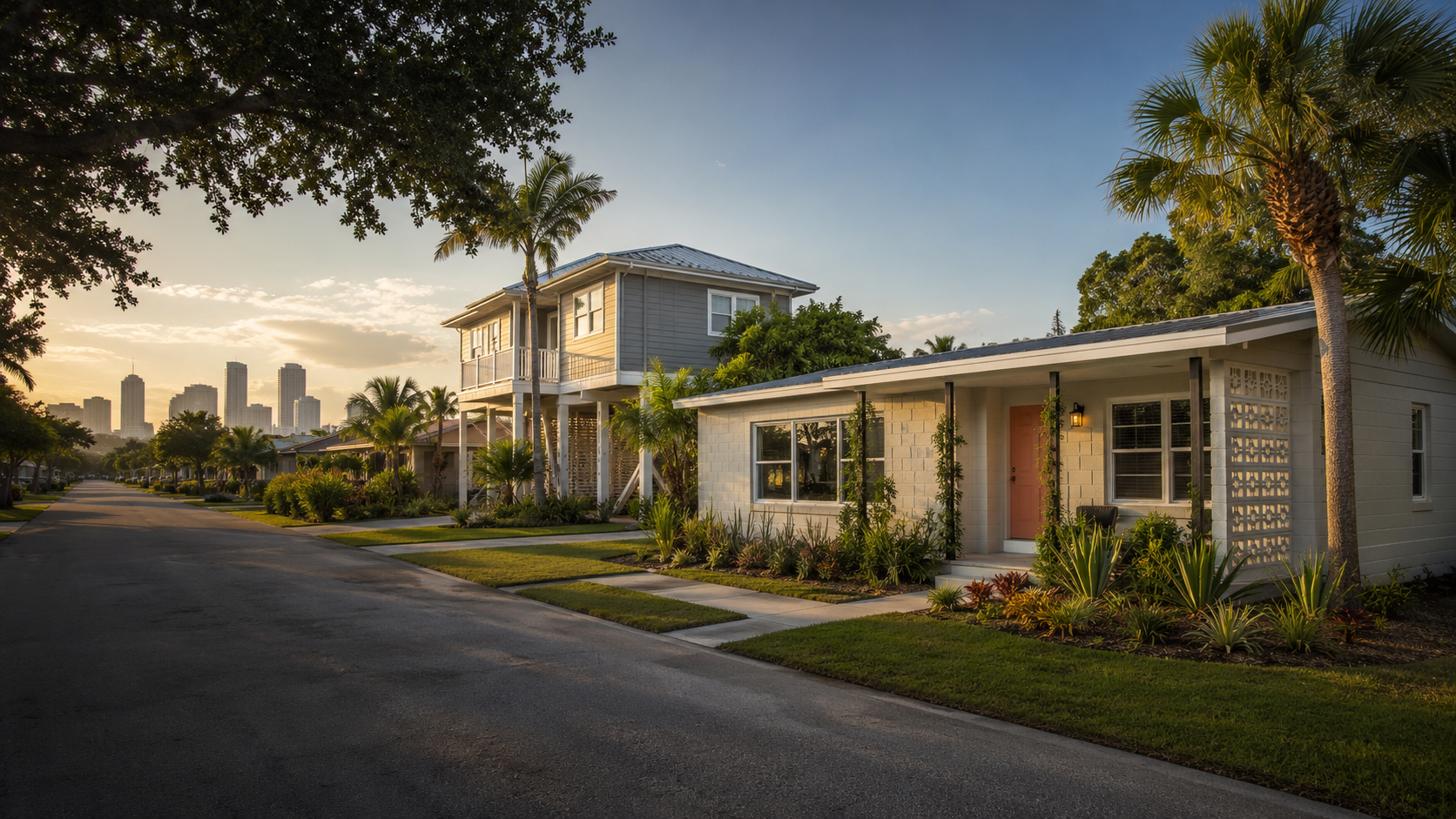
2,000 SF · 1955 block · Zone X · $300K
Renovate the systems and layout, create a like-new home, and sell into the strongest retail demand the property can support.
$250K existing home · Flood Zone AE 11
A teardown and elevated, FEMA-compliant new home may create more value than preserving an obsolete structure.
South St. Pete · Zone AE · no flood history
If the acquisition works as a rental but new-build comps are thin, hold the property until the redevelopment case catches up.
Illustrative decision frameworks, not predetermined recommendations. Real projects require property-specific underwriting and due diligence.
POWERED BY DISPENSA PROPERTIES
Finding a promising property is only the beginning. The value comes from acquiring it correctly, controlling the project, and managing the final outcome.
Find the opportunity and determine the best use.
Brokerage, negotiation, due diligence, and closing.
Price the risk, work, carrying cost, and exit.
Manage renovation, development, or construction.
Resell, refinance, lease, or manage long term.
THE FREE FIELD GUIDE
Construction eras. Flood and insurance risk. Layout problems. Renovation decisions. Tenant fraud. Infill and new construction. The guide is built from actual operating experience—not recycled national advice.
REQUEST INVESTOR ACCESS
A defined buy box helps us identify relevant opportunities and understand where brokerage, construction, management, or disposition support can improve the outcome.